
Unlock the Editor’s Digest for free
Roula Khalaf, Editor of the FT, selects her favourite stories in this weekly newsletter.
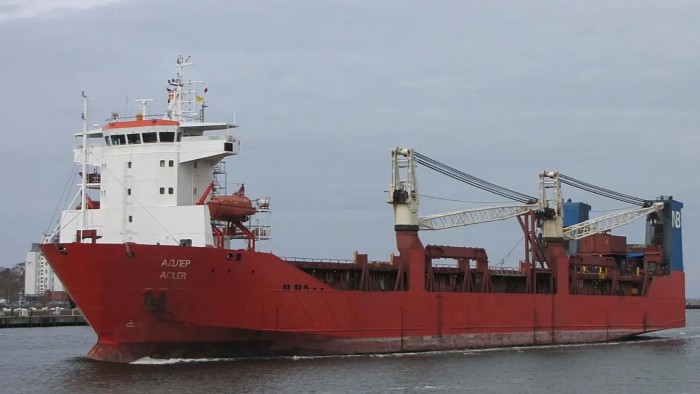
Swedish authorities boarded a sanctioned Russian ship previously used for transporting weapons just off the country’s west coast in the latest incident between Nato countries and Moscow’s vessels in the Baltic Sea region.
Adler, a roll-on, roll-off freighter that analysts said had in the past been used to ship weapons, developed engine troubles on Saturday and stopped in Sweden’s territorial waters before customs officers and border officials boarded it during the night to Sunday.
The crew were welcoming and the inspection was continuing on Sunday morning, according to Sweden’s customs service. Local media reported that Sweden’s intelligence services and prosecutors were also involved in the case.
Concern is increasing among Nato countries bordering the Baltic Sea about Russia’s shadow fleet of vessels used to circumvent western sanctions on oil as well as cargo ships transporting weapons.
Adler has been stopped by a Nato country before when Greek forces boarded it in 2021 to ensure it was not carrying weapons to Libya, sparking Russian ire.
The vessel is owned by M Leasing LLC, which is sanctioned by the US, EU and multiple European countries for its role in transporting North Korean ammunition for use in Russia’s war against Ukraine.
It issued a distress call on Saturday morning near the Swedish town of Höganäs, in the straits between Denmark and Sweden.
The boarding by Swedish officials comes after a number of vessels belonging to Russia’s shadow fleet cut cables and pipelines in the Baltic Sea in 2024, culminating in Finnish border guards abseiling on to the Eagle S oil tanker on Boxing Day last year to detain its crew.
Finland brought a case against the captain and senior officers of the Eagle S for gross sabotage as it found that the cables cut by the ship were in international waters.
Asked by the Financial Times if that gave Russian-backed vessels carte blanche in international waters, Finland’s foreign minister Elina Valtonen said in October: “Yes, and that’s a problem.”
But Valtonen and officials from other Baltic Sea countries also hailed the impact of Nato’s increased presence in the area, which has seemingly acted as a deterrent for further serious acts of sabotage this year.
However, ministers across the region are still on high alert, especially due to the risk of an environmental catastrophe in the shallow and narrow Baltic Sea due to Russia’s use of old vessels.
Lady Mariia, another Russian roll-on roll-off vessel that has been used to transport weapons, also developed engine trouble off the coast of Sweden earlier this month, but regained control within a few hours.
Finland’s Prime Minister Petteri Orpo told the FT this week: “We have to find the tools to protect our critical infrastructure that is situated in international waters. It is not OK that someone is on purpose destroying our property.”
Read the full article here